

Views: 0 Author: Site Editor Publish Time: 2026-06-19 Origin: Site


Procurement managers face a constant balancing act when designing fluid power circuits. You need highly reliable components to keep operations running smoothly. Over-specifying standard lines drains your maintenance budget rapidly. Under-specifying invites catastrophic system failures and severe safety risks. This delicate engineering balance makes accurate component selection highly critical for everyone involved. We consider the DIN EN853 1SN standard an ideal global benchmark. It handles standard-duty fluid power applications beautifully. It offers a precise middle ground for numerous demanding operational environments. In this comprehensive guide, you will learn exactly how this standard operates in the field. We explore where it excels and clearly identify where it falls short. We break down its technical framework and identify practical real-world applications. You also discover how to evaluate global suppliers effectively. This data-driven analysis ensures your next procurement decision maximizes safety protocols. It will fundamentally help you boost overall system efficiency.
Core Classification: DIN EN853 1SN is a standard-duty, single-layer wire braided hose designed specifically for medium-pressure applications.
Design Advantage: Features a thin outer cover ("SN" designation) that allows for "no-skive" crimping, significantly reducing assembly time and errors.
Primary Usage: Serves as the go-to medium pressure hydraulic hose for general industrial systems, mobile equipment, and is widely utilized as an agricultural machinery hose.
Equivalency: Frequently cross-referenced and generally interchangeable with the SAE 100 R1AT standard in global procurement.
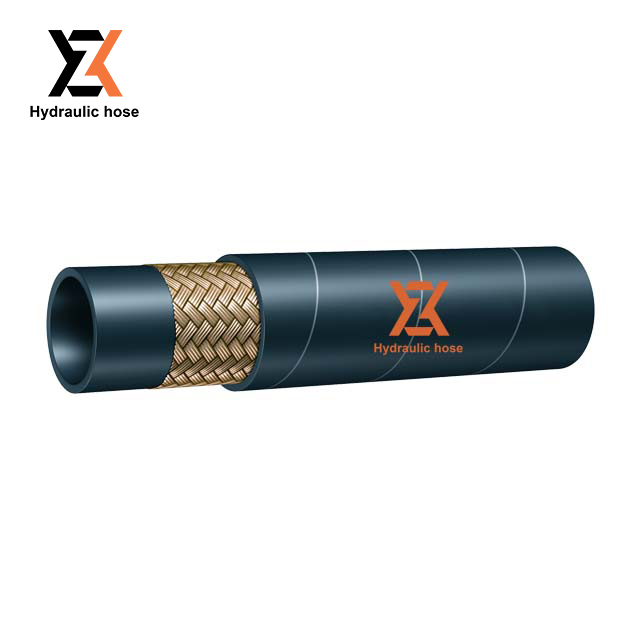
Engineers must understand the precise structural anatomy of a fluid power line. The internal architecture determines how well a component survives daily abuse. The DIN EN853 1SN standard outlines very specific material and dimensional requirements. We can break this construction down into three core layers.
The inner tube serves as the primary fluid barrier. Manufacturers construct this layer using specialized oil-resistant synthetic rubber. This material choice prevents the tube from swelling or degrading over time. It reliably handles petroleum-based hydraulic fluids. It also easily accommodates water-based emulsions and synthetic lubricants.
The reinforcement layer dictates the internal pressure capacity. This standard requires exactly one braid of high-tensile steel wire. The single braided design creates a perfect engineering compromise. It provides ample strength for standard hydraulic functions. At the same time, it maintains excellent flexibility for tight mechanical routing.
The outer cover protects the critical wire braid from external damage. Factories use weather-resistant and abrasion-resistant synthetic rubber here. This protective barrier fights off ozone degradation and ultraviolet light exposure. It also prevents rust from compromising the internal steel reinforcement.
The letters "SN" carry massive implications for maintenance teams. This designation means the outer rubber cover remains relatively thin. You can press metal fittings directly onto the line without removing the rubber. Industry professionals call this a "no-skive" assembly process.
Older standards often required a "skive" process. For example, the 1ST specification forced technicians to peel away the outer rubber. They had to expose the bare steel wire before attaching the fitting. This older process wasted significant labor time. It also introduced severe risks of damaging the wire braid during peeling. The 1SN no-skive design eliminates these assembly errors entirely. It guarantees a faster, safer, and cleaner manufacturing workflow.
Working pressure capabilities scale inversely to the inside diameter (ID). Smaller lines handle much higher pressures than larger ones. The bend radius also increases as the physical size grows. We compiled standard baseline metrics to illustrate this scaling effect clearly. You must reference these figures during your initial design phase.
| Dash Size | Inside Diameter (ID) | Max Working Pressure (Bar) | Min Burst Pressure (Bar) | Min Bend Radius (mm) |
|---|---|---|---|---|
| -04 | 1/4" (6.4 mm) | 225 | 900 | 100 |
| -06 | 3/8" (9.5 mm) | 180 | 720 | 130 |
| -08 | 1/2" (12.7 mm) | 160 | 640 | 180 |
| -12 | 3/4" (19.0 mm) | 105 | 420 | 240 |
| -16 | 1" (25.4 mm) | 88 | 350 | 300 |
Selecting the correct size ensures safe operational parameters. System designers rely heavily on the 4:1 safety factor shown above. The burst pressure always measures exactly four times the maximum working pressure. Any reliable DIN EN853 1SN hydraulic hose adheres strictly to these safety margins.
Engineering teams deploy this specification across diverse global industries. Its versatile design makes it a universal problem solver. We see it function beautifully wherever moderate power transmission is necessary. Let us explore the most prominent sectors utilizing this standard today.
Modern farming machinery demands robust yet highly flexible fluid power lines. The 1SN standard excels in these harsh outdoor environments. You will frequently see it act as a dependable agricultural machinery hose. It connects tractor attachments, heavy-duty harvesters, and commercial log splitters.
These machines navigate uneven terrain constantly. The lines must bend and flex repeatedly without kinking or rupturing. The single wire braid provides the exact flexibility farmers need. It handles the moderate pressure demands of lifting plow arms smoothly. It also powers augers and rotary cutters efficiently.
Construction vehicles utilize complex multi-tiered fluid circuits. Heavy excavators use massive multi-spiral lines for their primary digging propulsion. However, those thick multi-spiral lines are too rigid for secondary functions. The 1SN specification handles the lighter, secondary circuits beautifully.
Steering Mechanisms: It provides smooth, responsive fluid flow to steering cylinders.
Pilot Lines: It transmits low-pressure control signals from joysticks to main valves.
Auxiliary Lifting: It operates smaller stabilizer legs and light utility buckets.
Return Lines: It securely channels low-pressure fluid back to the main reservoir.
Using a lighter single-braid line in these areas saves weight. It dramatically reduces installation complexity inside cramped engine compartments. It also saves procurement teams substantial money compared to over-specifying spiral alternatives.
Indoor manufacturing facilities rely heavily on automated fluid power. The 1SN standard serves as an ideal medium pressure hydraulic hose for plant operations. Factory automation systems, hydraulic presses, and injection molding machines use them extensively. You will also find them powering commercial medium-pressure washing stations.
Fluid compatibility makes this specification highly attractive for industrial buyers. Mineral oils flow through these lines without degrading the synthetic rubber. The inner tube also safely transports glycol and polyglycol solutions. Aqueous emulsions pose no threat to the structural integrity either. This broad compatibility streamlines factory inventory significantly.
Every engineering standard has strict physical limitations. Setting realistic performance expectations builds long-term system reliability. You must understand exactly where these components will fail if misapplied. Recognizing these boundaries prevents dangerous accidents and costly unplanned maintenance.
Standard hydraulic systems rarely operate at static, unchanging pressures. Valves open and close rapidly during normal machine cycles. These actions create violent pressure spikes called hydraulic shocks. A single wire braided hose handles smooth pressure delivery exceptionally well. However, it cannot survive high-frequency, severe impulse cycles indefinitely.
When extreme shockwaves hit the single wire layer repeatedly, fatigue occurs. The steel wire begins to weaken and eventually snaps internally. If your machinery generates violent, sudden pressure peaks, you need an upgrade. Heavy-duty multi-spiral designs like EN 856 4SP absorb severe shocks much better. Always analyze your system's impulse frequency before specifying a single-braid option.
Thermal stress destroys rubber compounds faster than almost any other variable. The EN853 1SN specification carries very specific temperature parameters. Standard operating ranges sit comfortably between -40°C and +100°C. The material can handle intermittent temperature peaks up to +120°C safely.
Running your machinery continuously at absolute peak temperatures carries major risks. The synthetic rubber cover will harden and lose its vital elasticity. Once the rubber hardens, micro-cracks form during normal bending motions. These cracks expose the internal steel wire to atmospheric moisture. Rust quickly follows, leading inevitably to a catastrophic burst. Consider installing secondary fluid coolers if your system runs exceptionally hot.
The standard synthetic cover resists basic physical wear well. However, constant rubbing against sharp metal chassis edges ruins any rubber quickly. Dynamic routing causes the line to physically move during operation. This movement generates severe friction against surrounding brackets or other lines.
Common Mistakes in Routing:
Tying lines too tightly together, causing them to rub during pressure surges.
Routing components directly across exposed bolts or sharp metal frame corners.
Ignoring the minimum bend radius, which stresses the outer cover prematurely.
Failing to install supplementary protective sleeving in high-friction zones.
We highly recommend utilizing external spiral guards or textile sleeves. These inexpensive protective additions absorb the frictional damage. They extend the component lifespan significantly in rugged, dynamic environments.
Global procurement teams face a frustrating geographic friction point daily. They must constantly map European standards against American specifications. Understanding international standard equivalency speeds up part sourcing dramatically. It prevents assembly lines from halting due to minor documentation discrepancies.
The European DIN EN 853 1SN standard closely mirrors the American SAE 100 R1AT standard. They are virtually identical in physical construction and dimensional tolerances. Both require a single wire braid and a thin, no-skive rubber cover. They share the exact same maximum working pressure ratings across all sizes.
You can largely treat them as perfectly interchangeable on your Bills of Materials (BOMs). Many top-tier manufacturers actually dual-brand their products to reflect this reality. You will frequently see both standard names printed continuously along the rubber layline. This dual branding allows a single inventory item to satisfy global engineering requirements.
While the technical dimensions match, legal compliance nuances exist. Regional safety directives often demand specific paperwork. For example, exporting heavy machinery into the European Union requires strict CE marking. The CE documentation usually explicitly demands the EN specification by name.
If you build machinery in America for European export, sourcing matters. A standard DIN EN853 1SN hose provides the exact compliance paperwork European inspectors expect. Using a product marked only with the SAE standard might trigger customs delays. Always align your physical component markings with your target export market's regulatory demands.
We created a simple comparison chart to clarify this equivalency.
| Feature | DIN EN 853 1SN | SAE 100 R1AT |
|---|---|---|
| Reinforcement Layer | Single Steel Wire Braid | Single Steel Wire Braid |
| Cover Type | Thin (No-Skive) | Thin (No-Skive) |
| Primary Market Origin | Europe | North America |
| Interchangeable? | Yes (in most practical applications) | Yes (in most practical applications) |
Not all manufacturers maintain the same rigorous quality control standards. Cheap, uncertified components flood the global industrial market constantly. These inferior products suffer from premature cover cracking and dangerous fluid weeping. You need a reliable framework to evaluate potential vendors during the decision stage.
Quality components reduce unplanned machine downtime effectively. We strongly advise using the following evaluation criteria when selecting a new manufacturing partner.
Verify Dimensional Tolerances: Request the supplier's engineering tolerance charts. The manufacturer must guarantee tight ID and OD (outside diameter) tolerances. Loose tolerances cause fittings to slip or leak during no-skive crimping procedures.
Demand Material Verification: Ask for independent laboratory data on the rubber compound. You want to see official ISO standard abrasion test results. High-quality synthetic rubber withstands ozone and weather testing far better than cheap alternatives.
Check Batch Traceability: Examine the printed layline on the sample product. Look for continuous, clear printing displaying the standard, size, and date of manufacture. Excellent traceability allows your maintenance team to log installation dates accurately.
Evaluate Impulse Testing Data: Request the factory's dynamic impulse test reports. Even a single-braid product must pass thousands of standardized pressure cycles before failure. Legitimate factories provide these test certificates willingly.
Assess Packaging and Delivery: Observe how the supplier ships the bulk coils. Proper packaging prevents the rubber from crushing or deforming during long transit times. Deformed lines crimp poorly and fail faster in the field.
Choosing compliant, rigorously tested products eliminates frustrating maintenance emergencies. It keeps your machinery operating safely at maximum output capacity. A strict vendor vetting process always yields higher long-term operational stability.
Selecting the ideal fluid power line requires precise technical awareness. The DIN EN853 1SN standard represents the definitive choice for standard medium-pressure circuits. It delivers exceptional flexibility, reliable fluid compatibility, and simplified no-skive assembly. It performs flawlessly provided your system does not generate severe, violent hydraulic shocks.
We recommend taking immediate action to optimize your current machinery. First, verify your system's peak working pressure and typical fluid temperatures. Next, physically inspect your current routing paths for dangerous abrasion zones. Finally, invite reputable suppliers to provide technical specification sheets. Request a small product sample to conduct your own internal compatibility testing. Smart, data-driven procurement guarantees safer, more efficient daily operations.
A: The number "1" indicates a single layer of steel wire braid reinforcement. The letters "SN" stand for Standard No-skive. This means the outer rubber cover remains exceptionally thin. You do not need to peel or remove this outer rubber before attaching metal fittings. This design significantly speeds up the entire assembly and crimping process.
A: The 1SN model features one layer of wire reinforcement. The 2SN model contains two complete layers of braided wire. The extra wire layer gives 2SN a significantly higher working pressure and burst rating. However, that second layer also makes the 2SN slightly heavier, thicker, and noticeably less flexible than 1SN.
A: Yes, the synthetic rubber inner tube is fully compatible with water and water-oil emulsions. However, you must carefully monitor the fluid temperature. Operating temperatures for pure water applications should typically not exceed +70°C. Pushing water temperatures higher accelerates internal tube degradation and reduces overall component lifespan.
A: They are functionally equivalent and highly interchangeable. The SAE 100 R1AT and EN 853 1SN share identical working pressures, single-wire construction, and no-skive dimensional requirements. Premium manufacturers frequently dual-brand their products. You will often see both standard designations printed side-by-side along the outer rubber layline.


