

Views: 0 Author: Site Editor Publish Time: 2026-09-11 Origin: Site


Hydraulic hoses are essential components in hydraulic systems, transferring fluid between pumps, valves, cylinders and other components. However, improper selection, installation or maintenance can lead to premature hose failure, fluid leakage and unexpected equipment downtime.
For distributors, equipment manufacturers and hydraulic hose buyers, understanding the common causes of hose failure can help improve equipment reliability and reduce replacement costs.
Here are seven common causes of hydraulic hose failure and how to prevent them.
Every hydraulic hose has a specified working pressure and burst pressure. Operating above the recommended pressure can damage the reinforcement and shorten hose service life. Pressure surges should also be considered, especially in heavy-duty equipment.
How to prevent it: Select a hose with a suitable working pressure rating for the application. Higher-pressure systems may require double wire braided or spiral hydraulic hoses.
For example, EN853 2SN / SAE 100R2AT hydraulic hose uses double steel wire braid reinforcement for higher-pressure applications.
Excessive bending or twisting can damage the hose reinforcement and reduce its service life. This is particularly important in excavators, loaders, agricultural machinery and other equipment with continuous movement.
How to prevent it: Follow the manufacturer's recommended minimum bend radius and avoid sharp bends or twisting during installation.
Contact with metal edges, moving components or other hoses can wear through the outer cover. Once the reinforcement is exposed, the risk of hose failure increases significantly.
How to prevent it: Check hose routing carefully and use suitable protection in areas exposed to abrasion. Keep hoses away from sharp edges and moving parts whenever possible.
Both excessive heat and very low temperatures can affect hydraulic hose performance. High temperatures may accelerate rubber aging, while low temperatures can reduce flexibility and increase the risk of cracking.
How to prevent it: Consider both hydraulic fluid temperature and ambient temperature when selecting a hose. Make sure the hose is suitable for the actual operating temperature range.
Using a hose that is not compatible with the working fluid may cause the inner tube to swell, harden, soften or crack.
How to prevent it: Confirm the hydraulic fluid type before purchasing and select a hose with suitable fluid compatibility. For OEM and customized orders, providing application and fluid information helps the manufacturer recommend an appropriate hose.
Even a high-quality hydraulic hose can fail prematurely if it is installed incorrectly.
Common problems include excessive twisting, incorrect hose length, poor routing, excessive bending and improper fitting assembly.
How to prevent it: Follow recommended routing and bend radius requirements. For hose assemblies, proper cutting, fitting selection and crimping are also essential.
Hydraulic hoses naturally deteriorate over time due to pressure cycles, temperature changes, vibration and environmental exposure.
Common warning signs include:
Cracks or hardening of the outer cover
Bulging or oil leakage
Excessive abrasion
Exposed reinforcement
Damaged or deformed fittings
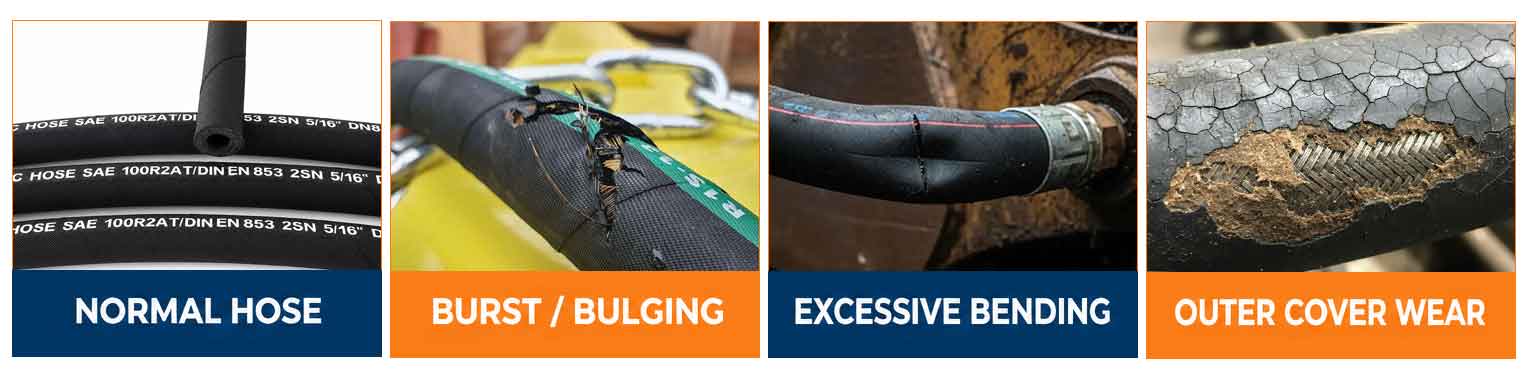
Regular inspection can help identify potential problems before they cause unexpected equipment downtime.
Proper selection, installation and maintenance can significantly improve hose service life.
Buyers and equipment manufacturers should:
Select the correct hose size and working pressure.
Follow the recommended minimum bend radius.
Avoid twisting, excessive bending and abrasion.
Check temperature and fluid compatibility.
Inspect hoses regularly.
Replace damaged hoses promptly.
For distributors and wholesalers, consistent quality from batch to batch is also important when sourcing hydraulic hoses from a manufacturer.
Choose hoses according to the actual working pressure, temperature, fluid and installation conditions. For distributors, sourcing from a manufacturer with stable production and quality control can also help reduce quality variations.
The choice depends on the required pressure and application. 1SN is commonly used for suitable medium-pressure applications, while 2SN provides higher pressure capability. Spiral hoses are designed for more demanding high-pressure applications.
Yes. OEM solutions may include customized specifications, hose markings, private-label branding, packaging and product identification. These options are useful for distributors and brands selling hydraulic hoses under their own product lines.
For an accurate quotation, provide the hose type or standard, inside diameter, length, working pressure, application and required quantity. For OEM products, branding, marking and packaging requirements should also be provided.
Consistent dimensions, pressure performance and product quality help distributors maintain stable product performance across different orders and reduce customer complaints.
Zhongxu supplies hydraulic hoses for distributors, wholesalers and equipment manufacturers worldwide.
Our product range includes SAE, EN and DIN hydraulic hoses, covering braided, spiral, compact and high-pressure constructions. OEM specifications, private-label branding, custom packaging and hose assemblies are also available.
If you are sourcing hydraulic hoses for distribution or equipment manufacturing, send us your requirements and application details.
Contact Zhongxu for reliable hydraulic hose solutions and OEM support.


