

Views: 0 Author: Site Editor Publish Time: 2026-06-30 Origin: Site


Modern automation demands higher power density packed into shrinking physical envelopes. Designers constantly push machinery to move faster and fit into tighter spaces. Consequently, routing fluid power lines has emerged as a critical engineering bottleneck. It frequently becomes a primary failure point in complex automated systems.
High-cycle dynamic environments often hide severe operational risks. Premature hose failure from overly tight routing causes catastrophic system downtime. Lost production hours quickly exceed the unit cost of any single hydraulic component. Plant managers cannot afford unpredictable ruptures.
We will explore why traditional fluid lines fail under high-stress automation demands. You will learn how to evaluate and specify an ultra flexible hydraulic hose for complex layouts. This guide provides an evidence-based framework for improving machine reliability and maximizing operational uptime.
Space vs. Power: Utilizing a small bend radius hose allows engineers to design tighter robotic cells without sacrificing fluid power capacity.
Cycle Life over Baseline Specs: Dynamic automation requires hoses tested far beyond standard SAE/EN impulse cycle minimums to ensure reliable Mean Time Between Failures (MTBF).
Material Trade-offs: Selecting a flexible steel wire hose requires balancing reinforcement strength against weight and torsional flexibility.
Implementation Matters: Proper CAD modeling and tension-free installation are just as critical as the hose material in preventing premature rupture.
Engineers face a constant conflict between compact machine footprints and physical routing limits. Traditional hydraulic lines require large bend radii to function safely. If you force standard lines into tight enclosures, they naturally buckle. They kink, pinch, and restrict hydraulic fluid flow. This spatial dilemma severely limits how small you can design an automated cell.
Standard hoses resist tight bends. Forcing them into confined areas creates severe mechanical stress. This action acts as a rapid stress multiplier in several ways:
It applies extreme side-load tension directly onto the metal fittings.
It pulls the hose out of its crimp shell, accelerating metal fatigue.
It presses the outer rubber cover hard against surrounding machine parts.
It triggers rapid jacket abrasion during machine vibration.
These multipliers guarantee early structural failure. A standard component simply cannot survive these compounded forces.
You should never frame fluid power success criteria around simple component unit costs. Instead, you must focus on maximizing machine uptime. 24/7 automated facilities require predictable maintenance intervals. Unplanned shutdowns halt entire production floors. Therefore, upgrading your routing strategy directly protects your operational output.
Robotic arms operate in three-dimensional space requiring continuous flexing. They twist, bend, and extend rapidly. Routing lines through articulated joints means space remains at an absolute premium. You must manage torsion carefully. Utilizing a small bend radius hose allows fluids to navigate these complex joints. It prevents binding and ensures continuous power delivery without joint restriction.
CNC machining centers rely on complex drag chains. These tracks guide cables and hoses back and forth. They perform millions of linear flex cycles annually. Standard rubber covers degrade quickly inside these moving tracks. You need a specialized dynamic hydraulic hose designed specifically for track environments. It prevents jacket shredding. It maintains structural integrity throughout endless repetitive motions.
Automated Guided Vehicles (AGVs) dominate modern warehouses. These battery-powered mobile units prioritize compact internal packaging. Weight reduction is critical for extending battery life. Heavy, bulky fluid lines add unnecessary mass. Pliable, lightweight alternatives contribute significantly to battery efficiency. They allow engineers to shrink the internal hydraulic power unit seamlessly.
Engineers must establish a strict evaluation framework. You need to determine how much radius reduction is safely possible. Decreasing the bend curve usually stresses the reinforcement layers. This stress can compromise overall burst pressure limits. High-performance components manage this trade-off using advanced metallurgy. They maintain peak working pressures even when bent tightly.
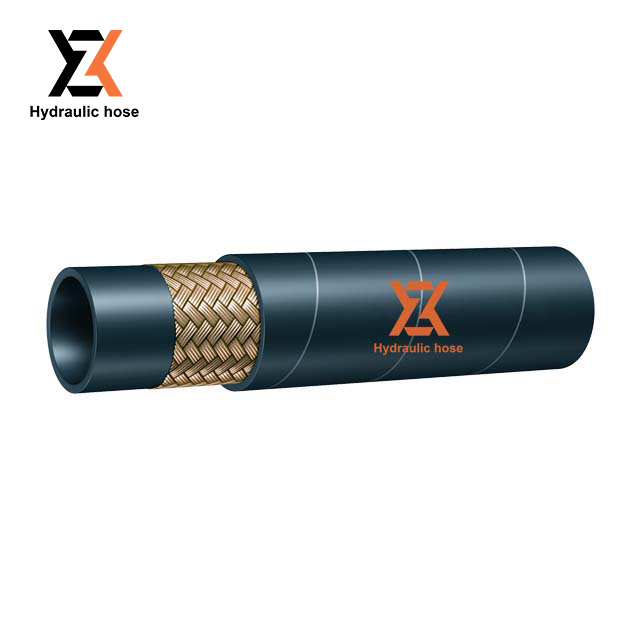
Traditional multi-spiral designs offer incredible burst strength. However, they remain highly rigid and heavy. Advanced engineering introduces newer braiding techniques. A flexible steel wire hose offers a superior balance. It delivers "tougher, lighter, more flexible" characteristics. The high-tensile wire provides necessary burst protection while permitting tighter routing curves.
Flexibility means nothing if external friction destroys the component. High-density routing inherently creates rubbing against adjacent lines. You must thoroughly assess abrasion resistance features. Advanced synthetic rubber or UHMWPE covers are often necessary. They ensure pliability does not come at the cost of external vulnerability.
Evaluation Summary Chart
| Characteristic | Standard Hose (SAE 100R2) | Ultra Flexible Counterpart | Engineering Benefit |
|---|---|---|---|
| Bend Radius | Baseline standard | Up to 50% tighter | Allows smaller machine footprints |
| Weight | Standard mass | Often 20-30% lighter | Improves AGV battery efficiency |
| Flex Cycles | 200,000 to 400,000 | 1,000,000+ | Extends maintenance intervals |
| Cover Toughness | Standard synthetic rubber | High-abrasion synthetic blends | Resists drag chain wear |
Digital design software faces serious engineering realities. Standard CAD programs struggle to accurately predict physical routing behavior. They map ideal static curves easily. However, they fail to simulate dynamic torsion, tension, and clash risks during actual motion. Engineers cannot rely solely on screen models. You must plan for physical deviations.
Human error during installation destroys superior materials. Introducing twists during the torquing phase is a massive integration error. A minor twist immediately halves the lifecycle of a high-performance assembly. Planners must address these common mistakes during assembly.
Best Practice: Always use two wrenches when tightening fittings to prevent twisting.
Best Practice: Utilize laylines printed on the outer cover as visual twist indicators.
Common Mistake: Clamping lines too tightly, which prevents natural length changes under pressure.
Temperatures alter material baseline pliability over time. Internal hydraulic fluid heat slowly hardens synthetic rubber. Ambient facility temperatures also play a major role. Freezing environments make standard rubber brittle and prone to cracking. Extreme heat accelerates chemical degradation. You must account for thermal cycles when predicting long-term dynamic flexibility.
Smart buyers look far beyond basic static spec sheets. Standard SAE requirements only guarantee baseline survival. You should demand specific dynamic impulse cycle test data from manufacturers. Ask for testing results performed at 120% of the rated working pressure. This aggressive testing proves true component durability for 24/7 automation.
Paper specifications only tell half the story. Explain your precise application to potential vendors. Request comprehensive burst testing reports. Ask for dynamic bend demonstration data. Physical validation verifies manufacturer marketing claims. It ensures their product actually withstands your specific operational stresses.
Never standardize a bill of materials blindly. We recommend acquiring sample assemblies first. Run physical routing tests inside a prototype automation cell. Pressurize the system and observe motion paths. Watch for unexpected abrasion or binding. This physical prototype phase prevents costly fleet-wide rollout errors.
Vendor Qualification Checklist:
Verify impulse test limits exceed SAE minimums.
Request detailed material data sheets for the outer cover.
Obtain physical samples for prototype drag chain testing.
Confirm exact crimp specifications for chosen fittings.
Specifying an upgraded fluid line is not about finding a universally "best" product. It requires finding the most mathematically appropriate component for your specific parameters. You must accurately match the bend constraints and expected cycle rates of your machine. Careful material selection directly prevents premature ruptures in tight envelopes.
We urge you to audit your current MTBF on all dynamic axes. Document exactly how often lines fail in your robotic cells or drag chains. Determine if a specialized upgrade is operationally justified. Taking immediate action to improve routing will stabilize your output and secure your automation investments.
A: A high-flexibility model typically features a minimum bend radius that is 30% to 50% tighter than standard SAE guidelines. Manufacturers achieve this by utilizing specialized high-tensile wire braiding and advanced rubber compounding. This allows extreme bending without kinking or stressing the inner tube.
A: No. Advanced manufacturing techniques prevent pressure loss. They utilize high-tensile steel wire woven in specific geometric patterns. This optimized braiding retains maximum burst pressure capabilities while simultaneously allowing the inner tube and outer cover to bend more freely.
A: You measure the bend radius from the inside edge of the hose curve, not the centerline. Identify the tightest physical turn the line makes during its machine cycle. Ensure this measured physical radius is strictly greater than the manufacturer's published minimum bend radius.
A: No. Torsion and linear flexing are entirely different mechanical stresses. Twisting forces quickly tear internal steel reinforcement layers apart. You must always avoid continuous torsion. Engineers should utilize proper swivel fittings and live joints to eliminate twisting during robotic articulation.


