| Quantity: | |
|---|---|


For quarry operators, agricultural processors, and inclined conveying system users, selecting a conveyor solution that prevents material slippage while maintaining stable performance under varying load conditions is essential. Our chevron conveyor belt is engineered to meet international quality standards, delivering reliable material transport on steep inclines and uneven terrains. Built with a precision-molded structure, it features a durable fabric carcass combined with integrally molded chevron (patterned) cleats, designed to enhance grip and effectively prevent rollback of bulk materials. The belt is constructed with high-quality rubber compounds that provide excellent resistance to abrasion, wear, and environmental exposure, ensuring long service life in demanding applications. With an operating temperature range of approximately -20℃ to +80℃, it performs consistently in both moderate and challenging outdoor environments, making it suitable for conveying materials such as sand, gravel, coal, grain, and fertilizers. Unlike standard flat conveyor belts, this model is optimized for inclined transport, balancing traction, durability, and flexibility, reducing material loss and improving conveying efficiency, making it an ideal solution for high-volume industrial and agricultural operations.
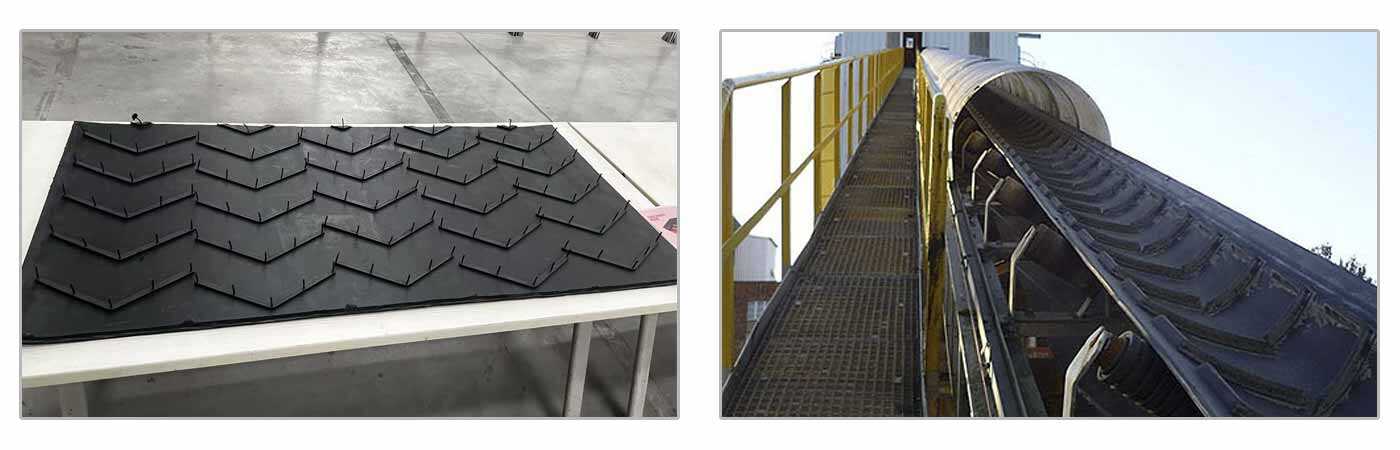
The chevron conveyor belt features a "base belt + integrated chevron" structure, designed for anti-slip incline transport:
Multi-ply fabric carcass (EP/NN/CC) with core rubber, ensuring tensile strength and flexibility; cover rubber on the bottom resists roller abrasion.
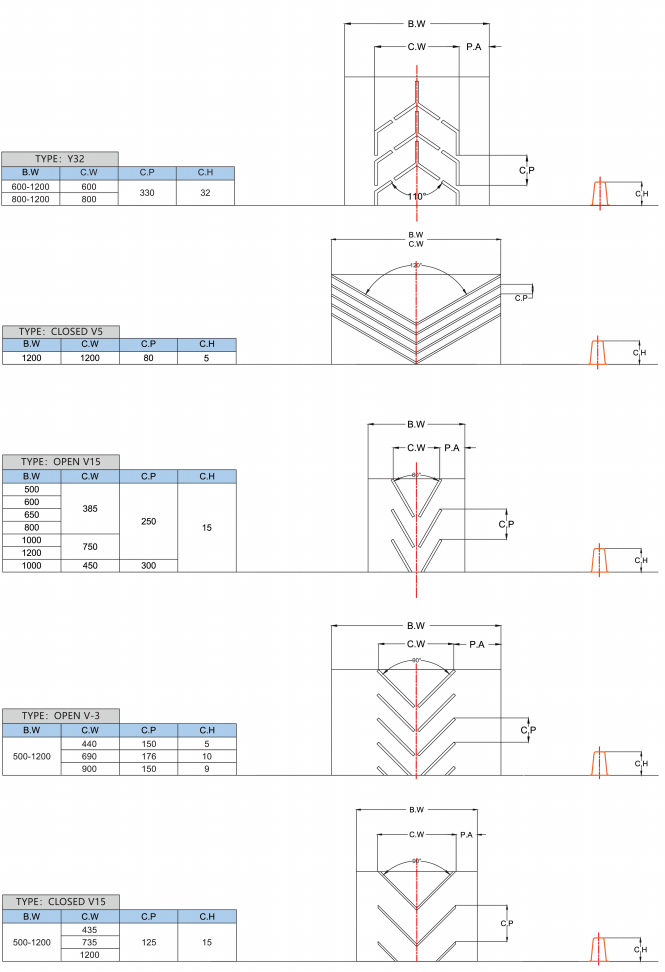
Chevron patterns (open V, closed V, L/H/Y/A/F type) vulcanized with the top cover rubber in one step—no secondary bonding, avoiding pattern detachment.
Reinforced edge rubber prevents belt edge wear and cracking during operation.
Features and Benefits
Suitable for 17-18° incline transport of bulk materials (e.g., coal, sand) and 30-50° incline transport of bagged materials (e.g., fertilizers, cement), with 95%+ material retention rate.
Chevron patterns and base belt are vulcanized in one step, with strong bonding; special wear-resistant cover rubber (Shore abrasion ≤120mm³) extends service life to 24+ months.
Optimized chevron angle and pitch design reduce friction between the belt and return idlers, ensuring stable operation without material residue accumulation.
Offers open V, closed V, L, H, Y, A, F type patterns; custom patterns can be developed according to material characteristics (e.g., wet/loose materials).
Compatible with small-diameter conveyor rollers (minimum 150mm), suitable for mobile conveying equipment (e.g., mobile crushers).
Carcasses: Polyester/Polyimide (EP), Nylon/Nylon (NN), Cotton/Cotton (CC)
Chevron Type: Open V, Closed V, L, H, Y, A, F type (customizable)
Belt Strength: From 56N/mm (CC56) to 400N/mm (EP/NN 400)
Belt Width: 400mm - 2200mm
Special Options: Flame-resistant (MT668), oil-resistant (HG/T3714), cold-resistant (≤-45℃)
backed by 20M meters annual capacity, we deliver small batches on time.
Support independent customization according to your needs (e.g., chevron type, belt strength, cover rubber performance).
50+ years of experience, ISO/CE/MA certification, and optimized processes ensure reliable quality (anti-slip, long life) at an economical price.
Reference Specification