

Views: 0 Author: Site Editor Publish Time: 2026-06-15 Origin: Site


Modern high-flow hydraulic systems operating in confined spaces face a fundamental design conflict. Standard two-wire lines simply cannot accommodate tight routing. They often kink or exceed their functional bend radius limits. Fluid velocity requirements strictly dictate the necessary inner diameter (ID) for optimal performance. Historically, upgrading to a larger ID severely compromised physical flexibility. Equipment builders continuously struggled to balance adequate flow volumes against extremely compact machine layouts. We see this common issue frequently across modern mobile equipment construction.
The SAE 100 R16 hydraulic hose completely resolves this pressing engineering challenge. It easily delivers the reliable pressure capabilities of traditional R2 designs. Crucially, it provides a significantly tighter bend radius. This unique combination makes it the absolute standard choice for compact, high-flow applications today. You will learn how to accurately size these critical lines for maximum efficiency. We will also explore vital safety protocols, intelligent routing best practices, and key system compliance standards.
Primary Advantage: SAE 100 R16 offers up to half the bend radius of SAE 100 R2, enabling routing in compact equipment without stressing the assembly.
Flow Optimization: Properly sizing a large ID hydraulic hose is critical to keeping fluid velocity within safe limits (typically 10-15 ft/sec for pressure lines) to prevent excess heat and turbulence.
System Compatibility: Maximizing the lifespan of an SAE 100 R16 hose requires strict adherence to matched fittings and accounting for dynamic pressure spikes in high-flow environments.
Fluid moving too rapidly through narrow spaces creates severe friction. We call this the velocity-heat problem. High flow rates in undersized lines drastically increase fluid velocity. Friction builds up quickly inside the system. This friction converts kinetic energy into trapped heat. Excess heat degrades synthetic rubber compounds prematurely. You lose fluid viscosity and essential component protection. Over time, constant thermal stress causes the rubber tube to crack and fail.
Engineers usually attempt to solve this velocity issue by upgrading the inner diameter. A larger opening naturally slows the fluid down. However, this creates a frustrating sizing dilemma. Upgrading the ID resolves your immediate flow restriction. Unfortunately, traditional designs make larger sizes exceptionally bulky. The outer diameter (OD) grows substantially. The entire line becomes stiff, heavy, and nearly unmanageable in tight spaces.
Manufacturers developed a brilliant solution to balance size and flexibility. They build the R16 utilizing one or two high-tensile steel wire braids. Engineers design it specifically to maintain a minimal outer profile. This advanced construction ensures exceptional physical flexibility. It functions perfectly as a compact hydraulic hose in almost any modern chassis. You can navigate sharp corners effortlessly. It performs brilliantly even at larger inner diameters required for heavy fluid volumes.
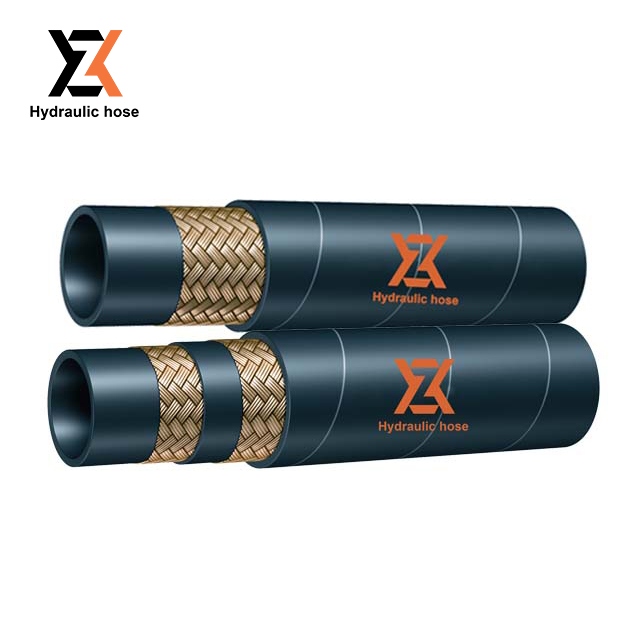
Evaluating your options requires a direct feature-to-outcome comparison. The bend radius remains the most critical metric for modern equipment. R16 bends up to 50% tighter than standard R2. The engineering outcome means drastically easier installation. Modern machines feature densely packed engine envelopes. You need tight routing capabilities to avoid stressing connected components.
Weight and physical profile also play major roles in system design. R16 weighs significantly less and reduces overall bulk. The outcome translates to reduced structural load on mobile equipment. Mechanics can bundle multiple lines together cleanly. Despite these physical differences, both share identical working pressures across corresponding sizes. You never sacrifice strength for flexibility.
| Feature | SAE 100 R2 | SAE 100 R16 | Engineering Outcome |
|---|---|---|---|
| Bend Radius | Standard industry curve | Up to 50% tighter curve | Easier installation in confined chassis spaces. |
| Weight & Bulk | Heavier, thicker outer cover | Lighter, highly streamlined profile | Better bundling and reduced mobile equipment load. |
| Working Pressure | Matched to SAE J517 standards | Identical matched pressure specs | No loss of performance despite smaller size. |
Your shortlisting logic should follow a simple rule. Ample routing space means standard R2 remains perfectly sufficient. It often provides a reliable baseline option. However, tight quick-disconnect (QD) spacing changes the equation entirely. Articulated joints demand extreme flexibility. When you retrofit modern high-flow pumps into older, cramped chassis layouts, the SAE 100 R16 hose becomes your mandatory upgrade.
Accurate sizing prevents turbulence and heat buildup. You must calculate the exact inner diameter (ID) carefully. We recommend using a standard hydraulic nomogram. You plot your required flow rate (GPM) on the left axis. You plot your target fluid velocity on the right axis. Connecting these two points reveals your exact necessary inner diameter.
Follow these steps to guarantee maximum flow efficiency:
Map Flow Rate: Determine the maximum GPM output of your pump.
Set Velocity Target: Aim for 10-15 ft/sec for pressure lines to ensure stable flow.
Select the ID: Pick the exact internal measurement to match your nomogram results.
Check Fittings: Ensure end connectors do not create unexpected flow bottlenecks.
Selecting a large ID hydraulic hose is crucial for system health. Ensure your chosen size prevents significant pressure drops across long runs. It must accommodate the necessary volume comfortably. However, you must also understand pressure rating realities. An inverse relationship exists between inner diameter and maximum working pressure. As the ID increases to accommodate massive fluid volumes, the overall pressure rating decreases.
Always verify your specifications closely. You must ensure the high flow hydraulic hose still meets or exceeds your system's maximum relief valve settings. Additionally, you must verify continuous operating temperatures. Massive flow naturally generates internal heat. Manufacturers typically rate R16 materials for -40°F to 212°F (-40°C to 100°C). Exceeding these thermal limits bakes the synthetic rubber tube. This causes immediate embrittlement and dangerous leaks.
Safety and compliance dimensions define professional hydraulic engineering. SAE J517 compliance establishes your minimum performance baseline. Every genuine R16 product must pass these rigorous testing protocols. However, certain operations happen in highly sensitive environments. Marine applications and heavy forestry equipment face severe external hazards. These specialized fields often require additional protection. You may need MSHA (Mine Safety and Health Administration) approved abrasion-resistant covers to survive daily impacts.
Evaluating burst pressure is non-negotiable. R16 adheres strictly to a 4:1 safety factor. This means the actual burst pressure stands at exactly four times the stated maximum working pressure. This safety margin protects operators from unexpected surges. You must never treat this margin as an excuse to exceed working limits.
We must establish a transparent assumption regarding application limits. R16 handles high continuous pressure exceptionally well. It shines in compact routing scenarios. However, it is fundamentally not a spiral-wound product. Systems generating extreme, continuous pressure impulses experience severe hammering effects. Violent fluid hammering can quickly outpace and destroy a braided wire construction. High-impulse applications demand heavy-duty SAE 100 R12 or R13 spiral variants instead.
Assembly procedures dictate ultimate reliability. You must follow the matched system rule strictly. Never mix hose brands and fitting brands. Different manufacturers use slightly different tolerances. Always use the manufacturer’s exactly specified crimp specifications. Improper crimping on a highly pressurized, compact assembly inevitably leads to catastrophic blow-offs. This endangers workers and ruins equipment.
Proper routing practices prevent premature mechanical wear. Consider these essential guidelines during your installation phase:
Prevent Twisting: Do not twist the assembly during installation. Use the printed layline as a continuous visual guide. A straight layline confirms zero twist.
Account for Shrinkage: Leave adequate slack for length changes under load. Pressurized lines can contract up to 4% of their total length.
Mitigate Rubbing: Use abrasion sleeves immediately where high-flow vibrations cause external rubbing. Protect areas near sharp chassis edges.
Avoid Over-Bending: Do not bend right behind the fitting. Allow a straight run for at least two times the outer diameter before curving.
Your next-step actions require careful field measurement. Audit your existing machinery's true flow rate (GPM). Measure the physical routing pathway to determine the exact required bend radius. Finally, consult a detailed manufacturer specification sheet. Cross-reference your necessary ID with your peak working pressure to ensure total system safety.
Selecting the right fluid conveyance lines for high-flow environments requires careful calculation. You must constantly balance strict fluid velocity requirements against severe physical routing constraints. Traditional products force you to compromise between ideal internal dimensions and manageable external bulk.
We highly recommend defaulting to R16 constructions over older R2 variants when designing modern compact equipment. This upgrade makes routing significantly easier and keeps your assembly stress-free. Always ensure your specific pressure profile aligns safely with wire-braid capabilities before finalizing your design.
Take immediate action by reviewing your manufacturer technical datasheets today. Verify your specific GPM-to-ID ratios closely. If you face particularly challenging chassis layouts, request a physical product sample. Testing your routing configurations firsthand ensures a flawless final installation.
A: Yes, R16 meets or exceeds the pressure and performance specs of R2 while offering a tighter bend radius. This makes it a direct, plug-and-play upgrade for complex routing situations.
A: Yes. As with most hydraulic hoses, as the inner diameter increases to accommodate higher flow rates, the maximum continuous working pressure decreases. Always check the exact specification chart for the specific size.
A: Typically, one-piece or two-piece crimp fittings designed specifically for wire-braided constructions are used. It is strictly recommended to use the exact fitting series specified by the hose manufacturer to maintain safety and warranty.


